每天一篇研报之——当刷手机成为一种经济指标
- 2026-09-24 23:18:58
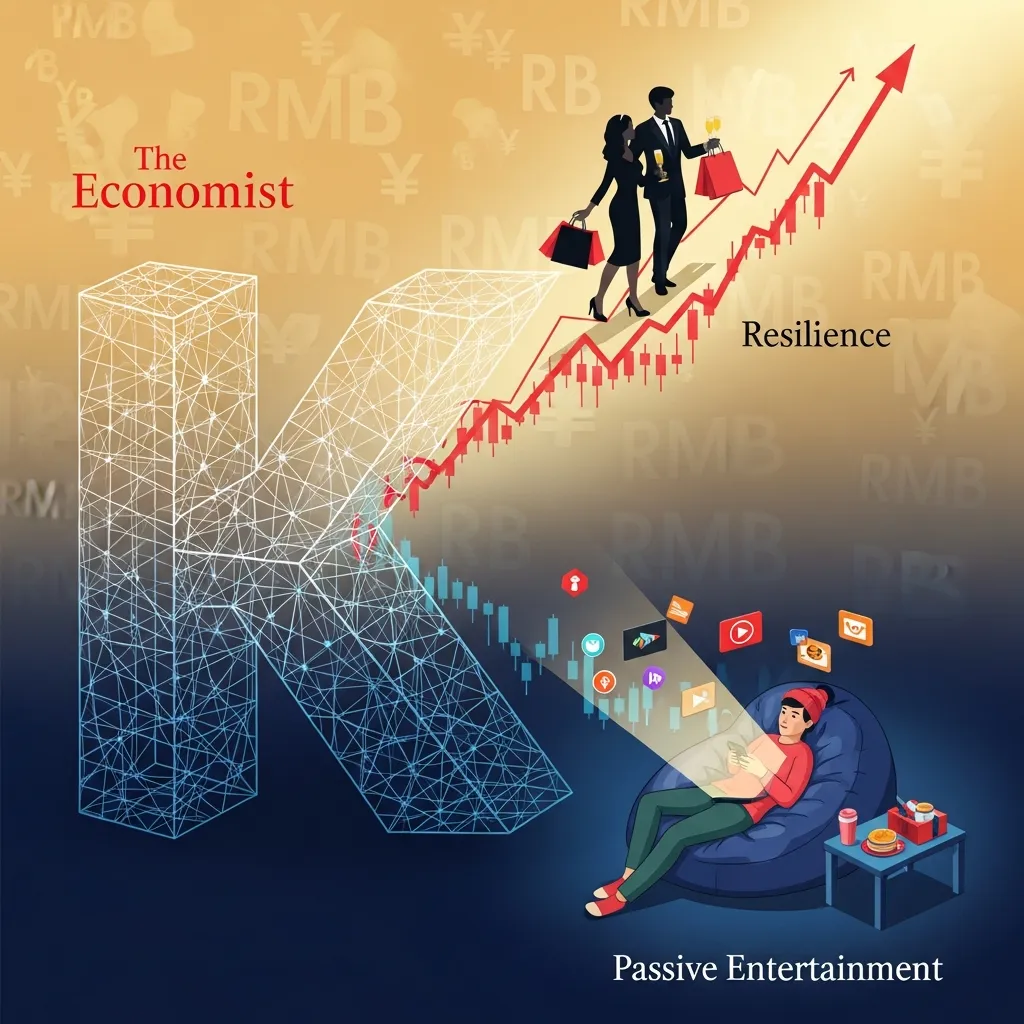
In this latest BofA survey, the analysts didn't just crunch numbers; they painted a portrait of a changing society.
在美国银行的最新调查中,分析师们不仅计算了数据;他们描绘了一个变化中的社会。
They describe a world where the wealthy are "resilient", the middle class is "pulling back", and everyone is choosing "digital content" over real-world connection.
他们描述了这样一个世界:富人韧性十足,中产阶级正在缩减开支,而所有人都选择了“数字内容”而非现实世界的连接。
Here are 5 expressions that capture the zeitgeist (时代精神) of China's current economy.

1. The Metaphor: "K-shaped"
"Are K-shaped consumers here to stay? ...Sentiments among affluent households remain resilient... while middle- and lower-income groups pulled back."
富裕家庭的情绪依然具有韧性。
🧐 Linguistic Deep Dive:
为什么是用字母 "K",而不是 "V" 或 "L"?
The Upper Arm (↗): Represents the "Affluent". BofA uses the word "Resilient" (有韧性的). They are not "booming", but they are surviving the storm without breaking.
K的上半笔画 (↗): 代表“富裕群体”。BofA 使用了 "Resilient"(有韧性)一词。这不代表他们在“暴发”,而是指他们在风暴中撑住了,没有崩盘。
The Lower Arm (↘): Represents the "Middle/Lower-income". Notice the verb "Pull back". It’s not just "spending less"; it implies a conscious, defensive action. Like a turtle pulling its head into a shell.
K的下半笔画 (↘): 代表“中低收入群体”。注意这里用的动词是 "Pull back"(回撤)。这不仅仅是“少花钱”,更暗示了一种有意识的防御性动作。就像乌龟把头缩回壳里一样。
"K-shaped" is the most brutal letter in economics. It creates a visual of Divergence (分化) — we are in the same storm, but not in the same boat.

"K型" 是经济学中最残酷的一个字母。它创造了一种分化的视觉感——我们在经历同一场风暴,但并不坐在同一条船上。
2. The Social Critique: "Passive Entertainment"
"...passive entertainment dominates leisure time... choosing digital content (Douyin, short dramas) over social activities."
“……被动娱乐占据了休闲时间的主导地位……人们更多选择数字内容(抖音、短剧),而非社交活动。”
🧐 Linguistic Deep Dive
BofA could have said "Online Entertainment," but they chose "Passive". Why?
BofA 本可以说“在线娱乐”,但他们选择了 "Passive"(被动)。为什么?
Active vs. Passive
Active: Going to a concert, traveling, meeting friends. (Requires money, energy, and effort).
主动娱乐包含去听演唱会、旅行、聚会。(需要金钱、精力和努力)。
Passive: Watching livestreams, scrolling Douyin. (Requires zero effort).
被动娱乐包含看直播、刷抖音。(零成本,零门槛)。
Using "Passive" implies a state of Low Energy and Low Cost. It suggests that the economy is not just suffering from a lack of money, but a lack of vitality. The consumers are physically and financially tired.
使用 "Passive" 暗示了一种低能量和低成本的状态。这表明经济不仅仅是缺钱,更是缺乏活力。消费者们在身体上和财务上都累了。
3. The Condition: "Hinges on"
"...its durability is uncertain and hinges on equity markets."
“……这种(消费的)持续性尚不确定,且关键取决于股市的表现。”
🧐 Linguistic Deep Dive
Forget "depends on". In professional writing, "Hinge on" is the superior choice.
忘掉 "depends on" 吧。在专业写作中,"Hinge on" 是更高级的选择。
Visual: A hinge (合页) is the small metal part that holds a heavy door. If the hinge breaks, the door falls.
画面感: Hinge(合页/铰链)是支撑沉重大门的那个小金属部件。如果合页断了,门就会倒塌。
Implication: It emphasizes a Critical Dependency.
隐含意义: 它强调了一种“关键性的依赖”(生死攸关)。
BofA is saying: The spending power of the wealthy isn't rock solid. It is delicately hanging on the performance of the stock market (A-shares). If the market drops, the "hinge" breaks.
BofA 的意思是:富人的消费能力并非坚如磐石。它微妙地悬系于股市(A股)的表现之上。如果股市跌了,这扇门的“合页”也就断了。
4. The Atmosphere: "Subdued"
"...a renewed pessimism... could strain an already subdued consumption picture."
“……重燃的悲观情绪可能会给本已低迷的消费图景带来进一步压力。”
🧐 Linguistic Deep Dive (语言深度解析):
If you want to describe the market, don't say "Bad". Say "Subdued".
如果你想描述市场不好,别说 "Bad"。用 "Subdued"。
Meaning: Quiet, depressed, lacking intensity.
含义: 安静的、压抑的、缺乏强度的。
Nuance: "Weak" suggests a lack of power. "Subdued" suggests a lack of mood.
细微差别: "Weak" 暗示缺乏力量。而 "Subdued" 暗示缺乏情绪/兴致。
It paints a picture of a market that is hushed, cautious, and afraid to make a noise. It’s a psychological description as much as an economic one.
它描绘了一个鸦雀无声、小心翼翼、不敢大声喧哗的市场画面。这既是经济描述,也是心理描写。
5. The Reality Check: "Face Value"
"...60% are only willing to purchase tickets at face value..."
“……60%的受访者只愿意按票面价格(原价)购买门票……”
🧐 Linguistic Deep Dive
The price printed on a ticket or coin.
印在票据或硬币上的价格(原价)。
In the past, paying a "Premium" (溢价/黄牛价) was a sign of strong consumer confidence.
在过去,支付 "Premium"(溢价/黄牛价)是消费者信心强劲的标志。
Now, the market has returned to Face Value. This is a powerful idiom for "Rationality" (理性). Consumers are stripping away the hype and only paying for what the product is actually worth.
现在,市场回归到了 Face Value。这是代表“理性”的一个强有力的习语。消费者正在剥离炒作,只愿意为产品本身的价值买单。
【Daily Writing Lab 】
试着用 BofA 的风格,把下面的“中式英语”升级为“投行英语”。
Rich people are still spending, but poor people are spending less. The market is quiet.
(富人还在花钱,穷人少花钱了。市场很安静。)
We see a K-shaped recovery. Affluent demand remains resilient, while others pull back. The overall sentiment is subdued.
(我们看到了K型复苏。富裕阶层的需求保持韧性,而其他人则在回撤。整体情绪依然低迷。)
Your Turn!
用 "Passive" 和 "Hinge on" 造一个句子,描述你最近的生活状态或工作项目。
(在评论区留下你的神作!)

